IT Isn’t Just About Data Security Anymore: Meet the GP IFAK Level 2

GP IFAK Level 2 for IT News

Information technology has spent decades building stronger defenses around data, networks, devices, and digital infrastructure. Firewalls have become more sophisticated, authentication has become more layered, and security teams now monitor environments around the clock for suspicious activity. Yet one part of operational security can still be surprisingly easy to overlook: the physical environment where technology professionals actually work.

Modern IT operations extend far beyond an employee sitting behind a computer in a climate-controlled office. Technicians work inside data centers, climb through equipment rooms, maintain network infrastructure, support major events, travel to remote installations, and respond to failures in warehouses, industrial facilities, temporary command centers, and outdoor locations. The broader the technology footprint becomes, the broader the definition of preparedness must become with it.

That shift is creating a stronger connection between cybersecurity, operational resilience, workplace safety, and emergency readiness. Protecting an organization means protecting information and infrastructure, but it also means recognizing that the people maintaining those systems may face physical emergencies that have nothing to do with malware or stolen passwords.

IT Security Has Expanded Beyond the Network

Traditional information security is centered on protecting confidentiality, integrity, and availability. Those principles remain essential, and the basic concept of information security on Wikipedia illustrates how broadly information assets and risk management can be understood.

The modern technology environment, however, has become increasingly physical. Cloud computing still depends on enormous buildings filled with servers, electrical distribution equipment, cooling systems, backup power, networking hardware, batteries, cabling, and sophisticated monitoring equipment. Wireless systems still require physical access points. Fiber networks still require installation crews. Telecommunications infrastructure still requires technicians to travel into the field.

Even cybersecurity programs increasingly recognize security as an organizational risk issue rather than something confined to an IT department. The NIST Cybersecurity Framework 2.0 connects cybersecurity risk management with broader enterprise risk management and workforce considerations. That is an important distinction because a resilient organization has to consider the people, facilities, processes, and technology required to keep essential operations functioning.

A server can be replaced. A backup can restore lost information. A compromised password can be reset. When a serious physical injury occurs, however, the first few minutes can carry much greater consequences.

The People Behind Critical Technology Still Face Physical Risks

Technology professionals routinely work in environments that contain hazards most customers never see. Data centers contain substantial electrical infrastructure. Installation teams may work around construction areas, ladders, tools, racks, loading docks, vehicles, generators, temporary cabling, and heavy equipment. Field technicians can find themselves miles away from the nearest office.

The growth of operational technology adds another dimension. IT teams are increasingly involved with industrial control systems, building automation, connected equipment, security systems, transportation infrastructure, manufacturing technology, and other environments where physical and digital systems intersect.

This is one reason IT security news increasingly includes discussions about critical infrastructure instead of focusing exclusively on traditional desktop computers and corporate servers. Organizations following the FBI Cyber Alerts can see how cybersecurity advisories now regularly address operational technology, industrial systems, infrastructure providers, and organizations responsible for essential services.

Those environments require a broader approach to readiness.

The cybersecurity team may have an incident response plan for ransomware, but an organization should also know what happens when someone is injured while responding to an incident. A network operations team may have redundant communications, backup generators, and spare switches, yet physical emergency equipment also deserves consideration as part of a comprehensive safety strategy.

Where the GP IFAK Level 2 Fits Into Modern IT Preparedness

An individual first aid kit, commonly called an IFAK, is intended to place important emergency medical supplies within reach when they are needed. Unlike the familiar office first aid box designed primarily around minor cuts and routine injuries, more advanced trauma-oriented kits may include equipment intended for serious bleeding and other traumatic injuries.

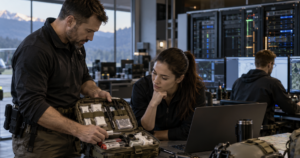
The GP IFAK Level 2 is described as a compact trauma kit containing items such as tourniquets, hemostatic dressings, chest seals, airway-related equipment, bandages, gauze, and other medical supplies. Its portability makes this type of equipment relevant to environments where employees or trained personnel may need emergency supplies available without relying exclusively on a stationary first aid cabinet.

That does not mean purchasing medical equipment replaces professional emergency services or proper training. It means organizations can think more carefully about how quickly appropriate supplies can be reached during an emergency and which trained personnel are expected to use them.

For IT departments managing large facilities, remote equipment sites, event technology, mobile operations, or critical infrastructure, accessibility can become an important part of preparedness.

Cyber Resilience and Physical Resilience Share the Same Philosophy

Some of the strongest principles in cybersecurity translate remarkably well to physical emergency preparedness.

Security professionals assume incidents will eventually occur. They create backups before systems fail. They establish response procedures before an attack happens. They maintain spare hardware before equipment breaks. They conduct exercises before an actual emergency forces employees to make decisions under pressure.

Physical preparedness follows the same logic.

The NIST Contingency Planning guidance describes contingency planning as a coordinated strategy involving procedures and technical measures designed to help organizations recover systems and operations following disruptions. Although the guidance primarily addresses information systems, the underlying operational principle is familiar: preparation should happen before the disruption.

Effective resilience depends on identifying foreseeable risks, determining what resources may be needed, deciding where those resources should be located, assigning responsibilities, training appropriate personnel, and periodically reviewing the plan.

That philosophy can apply to cyber incidents, natural disasters, equipment failures, fires, workplace injuries, severe weather, and other events capable of interrupting operations.

Data Centers Are Physical Facilities, Not Abstract Clouds

The phrase “the cloud” can make technology feel almost intangible. Behind that terminology are physical servers operating inside physical facilities.

Data centers contain dense concentrations of computing infrastructure along with power systems, cooling equipment, generators, batteries, elevated floors, racks, cabling, and fire suppression systems. Employees and contractors may be moving equipment, installing hardware, servicing systems, or responding to outages at all hours.

Network infrastructure carries similar realities. The NSA Network Infrastructure Security Guidance emphasizes the need to protect network environments through strong design, configuration, monitoring, and access controls. Digital safeguards remain fundamental, but the people implementing those safeguards occupy real environments where accidents can occur.

This is particularly important during emergencies. A serious outage may send technicians into equipment rooms during unusual hours. Severe weather could force staff to work under difficult conditions. Infrastructure failures may require employees to access generators, network closets, rooftops, outdoor communications equipment, or temporary workspaces.

Emergency readiness needs to travel with the workforce.

Field IT Has Changed the Security Equation

The IT department of the past could often be pictured as a centralized group supporting computers inside one office building. That description no longer fits many organizations.

Today’s technical workforce may include telecom installers, audiovisual specialists, cybersecurity engineers, event technology crews, wireless technicians, infrastructure contractors, network engineers, smart-building specialists, security system technicians, and employees managing Internet of Things equipment.

Some work from vehicles. Some enter industrial facilities. Some support concerts, conferences, sporting events, festivals, construction projects, government facilities, warehouses, and remote infrastructure.

That dispersion changes risk.

A first aid cabinet mounted in a headquarters break room provides little value to someone servicing equipment at a remote site. Emergency resources have to be located where emergencies might actually occur.

The same principle already exists throughout cybersecurity. Organizations do not install a single firewall and assume every endpoint is protected forever. Security controls are distributed throughout the environment according to risk. Physical preparedness can benefit from similar thinking.

Preparedness Should Be Layered

Cybersecurity professionals frequently talk about defense in depth. Instead of depending on one security control, organizations create multiple protective layers.

The CIS Critical Security Controls provide a prioritized framework of cybersecurity safeguards intended to reduce common and significant cyber risks. The philosophy behind layered security is straightforward: no single control can address every possible scenario.

Emergency preparedness should be similarly layered.

Emergency communication systems represent one layer. Clearly marked exits provide another. Fire extinguishers, automated external defibrillators, first aid supplies, emergency lighting, employee training, security procedures, evacuation plans, and relationships with local emergency responders all contribute additional layers.

More capable portable trauma supplies can become another element where an organization’s risk assessment indicates they are appropriate.

The objective is not to turn IT employees into emergency physicians. The objective is to make sure organizations have considered what resources trained personnel may need during the period before professional medical responders arrive.

Training Matters as Much as Equipment

Equipment is only one component of readiness.

Organizations that purchase emergency medical supplies should also consider appropriate first aid, CPR, bleeding-control, and workplace safety training based on their environment and applicable requirements. Employees should understand the limits of their training and know how to contact professional emergency services immediately.

The same principle applies in cybersecurity. Purchasing expensive security software accomplishes little if employees do not know how to recognize suspicious behavior or administrators do not know how to respond to alerts.

The FBI Cybersecurity Best Practices emphasizes practical security behaviors alongside technology. Updates, access controls, device security, authentication, and employee practices work together to create stronger protection.

Physical emergency readiness works the same way. Supplies, procedures, communications, and trained people form a system. Removing any one of those components can weaken the response.

Operational Security Is Becoming a Broader Discipline

Cybersecurity teams have spent years learning that resilience cannot depend on preventing every possible incident. Organizations also need the ability to respond, recover, and continue operating.

NIST’s Guide for Cybersecurity Event Recovery emphasizes recovery planning, prioritization of resources, realistic testing, and improvement based on previous events. Those concepts have value well beyond cyberattacks.

Prepared organizations think about what happens next.

When systems fail, employees know the recovery process. When communications go down, alternate channels exist. When facilities become inaccessible, continuity plans identify alternatives. When emergencies occur, personnel should know who is responsible for contacting emergency services, directing responders, assisting employees, and accessing emergency equipment.

This broader interpretation of security reflects how deeply technology has become connected to normal business operations. IT departments are no longer responsible for isolated computers. They often support the nervous system of the organization.

Cyber Threat Intelligence Reinforces the Need for Readiness

Technology professionals already operate in an environment where threats evolve continuously.

The NSA Cybersecurity Advisories and Guidance repository regularly publishes technical information addressing emerging vulnerabilities, infrastructure risks, network security, zero-trust architecture, and other security issues. The constantly changing nature of cyber risk has conditioned IT departments to monitor developments and adjust defenses.

Physical and operational risks deserve similar attention.

A growing organization may open new facilities. Infrastructure teams may begin supporting remote equipment. An IT department may inherit responsibility for physical access control systems or operational technology. A company may start supporting large public events. Employees may begin traveling to locations where emergency response times differ substantially from headquarters.

Preparedness should evolve as operations evolve.

Static safety plans are no more effective than static cybersecurity programs.

Security Culture Is Ultimately About People

Technology can sometimes encourage organizations to measure security almost entirely through technical metrics. Patch rates, vulnerability counts, intrusion attempts, downtime, backup completion, authentication failures, and endpoint compliance are all valuable measurements.

They are not the entire picture.

Every server room, network operations center, security operations center, telecommunications site, and technology deployment depends on human beings. Protecting those people deserves the same deliberate planning that organizations devote to protecting databases and networks.

Good security culture recognizes that continuity depends on both.

A company can maintain perfect backups and still face serious disruption if key employees are injured. It can deploy sophisticated threat detection while overlooking basic emergency preparedness at remote facilities. It can create detailed ransomware procedures while failing to consider how employees will respond to a physical emergency during an overnight infrastructure failure.

Mature risk management closes those gaps.

Conclusion

IT security is no longer confined to antivirus software, passwords, firewalls, encryption, and intrusion detection. Modern technology operations span data centers, telecommunications infrastructure, industrial environments, remote facilities, mobile teams, public events, and increasingly complex physical systems.

That reality is expanding the meaning of preparedness.

Cybersecurity remains essential, but organizations also need to think about resilience from the perspective of the employees who keep technology running. Emergency planning, accessible medical supplies, trained personnel, clear procedures, communications, and rapid access to professional emergency services all belong within that larger conversation.

The strongest IT organizations already understand one fundamental principle: preparation begins before the incident.

They back up data before a server fails. They patch vulnerabilities before attackers exploit them. They test recovery procedures before disaster strikes. Applying the same mindset to physical safety is not a departure from modern IT security. It is a natural extension of it.

As technology becomes more deeply connected to the physical world, the definition of security will continue to expand. Protecting information matters. Protecting infrastructure matters. Protecting the people responsible for both matters just as much. 🛡️💻🚑


Can Montblanc Pens Survive the AI Revolution? Why Luxury Writing Is Making a Comeback in IT

IT News for Montblanc Pens

Artificial intelligence is transforming the technology industry at a remarkable pace. Software developers are using AI assistants to write code, businesses are automating customer interactions, and IT departments are adopting intelligent systems that can analyze enormous amounts of information in seconds. Yet amid these advancements, one of the oldest tools in professional communication continues to hold a distinctive place in the modern workplace: the luxury writing instrument.

As digital technology becomes increasingly integrated into everyday business operations, the appeal of traditional handwriting offers an interesting contrast. Executives, technology entrepreneurs, and professionals who spend much of their working lives behind screens can still appreciate the precision, craftsmanship, and personal character of a beautifully made pen.

For those interested in premium writing instruments, Montblanc Pens represent a combination of established craftsmanship and sophisticated design. Their continued relevance highlights an important distinction in the technology industry. Innovation does not always mean replacing everything that came before it. Sometimes, the most valuable tools are those that provide an experience modern technology cannot fully duplicate.

The relationship between artificial intelligence and traditional writing reveals a broader development in the IT industry, where efficiency, human creativity, and personal expression are increasingly finding ways to coexist. 🖋️

The AI Revolution Is Changing How IT Professionals Work

Artificial intelligence has moved beyond experimental technology and become a central component of modern business infrastructure. Companies use machine learning, natural language processing, and generative AI to improve productivity, streamline operations, and support increasingly complex decisions.

According to the Stanford University 2026 AI Index Report, organizational AI adoption has reached 88%, demonstrating how extensively artificial intelligence has entered business operations. The report also documents substantial improvements in AI capabilities, particularly in software engineering and advanced reasoning.

These developments are especially significant for IT professionals. Tasks that previously required hours of manual analysis can now be completed more efficiently with automated systems. Developers can receive coding assistance, cybersecurity teams can investigate patterns in large datasets, and business analysts can generate preliminary reports without starting from scratch.

However, the growing capabilities of artificial intelligence also introduce new expectations. Technology professionals must evaluate automated recommendations, consider security implications, and make decisions that require professional judgment.

Digital tools are excellent at processing information, but the responsibility for understanding its significance often remains with people.

That distinction helps explain why traditional writing still has a role in technologically advanced workplaces. A handwritten note, an annotated document, or a carefully considered signature represents a deliberate human action in an environment increasingly dominated by automated processes.

Digital Overload Is Creating a New Appreciation for Analog Tools

Modern IT environments are built around speed, connectivity, and continuous communication. Employees move between project management applications, messaging platforms, development environments, video meetings, and cloud-based collaboration systems throughout the workday.

Although these technologies provide extraordinary convenience, constant connectivity can make uninterrupted concentration difficult.

A Microsoft report examining the increasingly demanding digital workday found that the average employee receives more than 100 emails and 150 Microsoft Teams messages daily. The research also highlighted how business communications regularly extend beyond traditional working hours.

This level of digital activity creates a practical reason to occasionally work away from a screen.

Writing by hand offers an alternative to the constant flow of notifications and electronic messages. It allows individuals to record ideas without immediately opening another application or becoming distracted by competing digital tasks.

For an IT manager developing a new infrastructure strategy, a notebook may provide a convenient place to explore an idea before presenting it to the team. A software architect might sketch a system relationship on paper before translating it into formal documentation.

The attraction is not necessarily nostalgia. It is the ability to choose a different working method when the situation calls for it.

Premium writing instruments fit naturally into this approach because they transform an ordinary activity into something more intentional. Their appeal comes from the writing experience, the materials, and the attention devoted to their construction.

Why Luxury Pens Still Have a Place in Modern Technology

Luxury writing instruments occupy an unusual position in the technology market. They are not designed to compete directly with smartphones, tablets, or artificial intelligence software. Their purpose is fundamentally different.

A premium pen does not require software updates, operating system compatibility, or a wireless connection. It provides a direct physical interaction between the writer and the page.

The distinction becomes clearer when examining the design of traditional fountain pens.

As explained in Wikipedia’s overview of fountain pen technology, a fountain pen uses a nib and an internal ink reservoir to deliver ink to paper. The underlying technology has been refined over generations, creating an instrument that combines mechanical engineering with traditional craftsmanship.

High-end manufacturers develop writing instruments with carefully balanced components, distinctive finishing techniques, and designs intended to remain appealing long after their introduction.

For technology professionals accustomed to evaluating products according to processing power, connectivity, and performance benchmarks, this represents a different kind of engineering achievement.

Instead of emphasizing computational capabilities, a luxury pen emphasizes material quality, balance, durability, and the physical experience of writing.

The two approaches are not incompatible. An individual who appreciates sophisticated software engineering may also recognize the precision involved in manufacturing a finely crafted writing instrument.

In that sense, traditional penmaking and modern information technology share a common foundation: thoughtful design and attention to detail.

Human Judgment Remains Essential in an Automated IT Industry

Artificial intelligence can generate recommendations, identify patterns, and automate repetitive work. However, organizations still need professionals who understand the consequences of technological decisions.

An automated system might identify a potential cybersecurity concern, but an experienced specialist must determine the appropriate response. AI can produce a software architecture proposal, but engineering teams remain responsible for evaluating reliability, scalability, and operational requirements.

The National Institute of Standards and Technology’s AI Risk Management Framework emphasizes the importance of managing risks associated with artificial intelligence, including accountability, reliability, transparency, and security.

These principles demonstrate why technological progress depends on more than processing information quickly.

In many professional settings, handwritten work can complement digital decision-making. Executives may annotate printed proposals, engineers may sketch preliminary concepts, and project managers may record observations during planning meetings.

Such practices do not eliminate the need for secure digital documentation. Instead, they provide another way to organize thoughts before information enters formal business systems.

For high-level professionals, the value of a quality writing instrument may be particularly apparent during activities requiring concentration, communication, or careful consideration.

A handwritten note can also carry a personal quality that standardized digital correspondence sometimes lacks.

The important factor is not whether handwriting is technologically superior. It is whether the method supports the task being performed.

The Connection Between Handwriting, Creativity, and Technology Innovation

Innovation often begins before an idea is fully developed.

A programmer may recognize a solution while drawing connections between different system components. A technology founder may outline a business concept before building a presentation. An IT consultant may identify a critical concern while reviewing handwritten meeting notes.

These activities illustrate the continued usefulness of informal thinking processes alongside sophisticated digital systems.

Research and discussion surrounding human-centered technology increasingly emphasize the importance of combining computational capabilities with human understanding.

For example, IBM’s examination of AI and enterprise design thinking explores how artificial intelligence can complement design approaches that prioritize human needs and business outcomes.

This relationship is particularly relevant to technology innovation.

AI tools can accelerate research, generate possible solutions, and help professionals examine alternatives. Human creativity remains important when determining which ideas deserve attention and how those ideas should be implemented.

Handwriting can support this process by giving individuals a flexible space for preliminary thinking. A page of notes does not have to follow the structure imposed by a particular software application.

Diagrams, words, arrows, and unfinished observations can exist together without requiring immediate organization.

For some professionals, that freedom makes paper a useful companion to digital tools.

A luxury pen does not create better ideas by itself. Its contribution is more personal: it can make the physical act of recording those ideas enjoyable enough to become a regular part of the creative process.

Why Personalization Matters in an Increasingly Automated Business World

One of the most significant consequences of artificial intelligence is the growing ability to produce content, communications, and business documents at scale.

Organizations can generate draft emails, technical summaries, customer responses, and internal reports with considerably less manual effort.

These improvements can save time, but they also make deliberate personal communication more noticeable.

A handwritten message accompanying a business gift, a personalized thank-you note after a major project, or a signed letter recognizing an employee’s contribution can communicate attention beyond the ordinary expectations of automated correspondence.

This does not mean handwritten communication is appropriate for every professional situation. Most IT operations depend on searchable records, documented workflows, and reliable digital communication.

Personal correspondence serves a different purpose.

Technology executives and business leaders often work to build lasting relationships with employees, clients, investors, and professional partners. Thoughtful personal gestures can contribute to those relationships without replacing the efficiency of digital systems.

The appeal of luxury writing instruments is partly connected to this distinction between convenience and meaning.

A routine project update may be better delivered through an online collaboration platform. A carefully written note recognizing years of professional achievement may benefit from a more personal presentation.

As automated communication becomes easier to produce, the choice to communicate individually can become more distinctive.

Luxury Writing Instruments and the Culture of IT Leadership

The technology industry is frequently associated with minimalist offices, advanced devices, and rapidly changing products. Yet professional leadership also involves traditions that extend far beyond the digital age.

Senior executives attend contract signings, commemorate business partnerships, recognize employee achievements, and participate in ceremonies marking important organizational milestones.

A quality writing instrument can have a place in these occasions because it combines practical use with symbolic significance.

For some professionals, a luxury pen becomes an accessory carried to important meetings. For others, it is a commemorative gift associated with a promotion, retirement, company anniversary, or major professional accomplishment.

These uses are not exclusive to the IT industry, but they remain relevant within it.

A technology company’s identity may depend on innovation, yet the individuals leading that company still participate in human relationships shaped by recognition, trust, and professional achievement.

Luxury writing instruments can also appeal to people who appreciate industrial design and precision manufacturing.

The same individual who values the construction of a premium laptop or high-end mechanical keyboard may appreciate the balance, finishing, and mechanical details of a traditional fountain pen.

The products serve different purposes, but the appreciation for thoughtful engineering connects them.

Artificial Intelligence Cannot Replace Every Element of Professional Experience

AI systems are becoming increasingly capable of performing tasks once considered dependent on human expertise.

However, completing a task and experiencing an activity are not always the same thing.

Artificial intelligence can generate a professional letter, but it cannot personally experience the act of writing that letter with a pen. It can suggest a thoughtful message, but the meaning associated with physically writing and delivering that message belongs to the person making the gesture.

This distinction does not diminish AI’s usefulness.

In fact, the most effective business applications often depend on combining automation with appropriate human oversight.

An IBM analysis of human-in-the-loop artificial intelligence explains how people can participate in automated processes to improve accountability, accuracy, and decision-making.

The broader lesson applies to the changing relationship between people and their tools.

Technology can make certain processes faster and more accessible, while traditional methods may continue to provide value through experience, control, and personal involvement.

For writing instruments, that value is not measured in the number of documents processed per minute.

It comes from the relationship between the object, the writer, and the purpose of the communication.

The Future of Luxury Writing in an AI-First Workplace

The continued development of artificial intelligence will undoubtedly influence how businesses create, store, and exchange information.

Digital signatures, cloud collaboration platforms, automated reporting, and AI-powered productivity systems will remain essential parts of enterprise technology.

Traditional handwriting will not replace these systems, nor does it need to.

Its future is more likely to depend on selective, purposeful use.

A developer may rely on AI tools for code assistance while keeping handwritten notes during architectural planning. A technology executive may approve contracts electronically while using a fine writing instrument for personal correspondence. An entrepreneur may manage an entire company through digital platforms while maintaining a physical notebook for strategic ideas.

These combinations reflect a practical approach to technology adoption.

Businesses benefit when they choose tools according to the needs of the activity rather than assuming newer technology automatically makes older methods irrelevant.

The emergence of increasingly autonomous enterprise systems also makes the distinction between automated output and individual responsibility more important.

A Reuters examination of recordkeeping challenges involving enterprise AI highlights the need to preserve appropriate context and audit trails for AI-generated business records.

That concern reinforces a broader principle: organizations must remain deliberate about how information is created, reviewed, authenticated, and preserved.

Handwritten documents are not a substitute for proper digital governance or legal recordkeeping. They are simply one of several methods people may choose when developing ideas or communicating personally.

Within that environment, high-quality writing instruments can retain their relevance without attempting to compete with artificial intelligence.

Conclusion: Traditional Craftsmanship Still Belongs in the Future of IT

Artificial intelligence is reshaping the technology industry, improving productivity, and creating opportunities that would have been difficult to imagine only a few years ago. Its expanding influence will continue to change how IT professionals work, communicate, and make decisions.

Yet technological advancement does not require the disappearance of traditional craftsmanship.

Luxury writing instruments remain relevant because they offer something different from digital tools. They emphasize physical interaction, careful construction, personal expression, and an appreciation for design that extends beyond software and electronics.

For IT professionals who spend their days working with automated systems, cloud infrastructure, and intelligent applications, the simple act of writing by hand can provide a useful change of pace.

The strongest argument for luxury writing is not that it can outperform modern technology. It is that technological efficiency and human experience serve different purposes.

The future of professional communication will almost certainly be more automated, more connected, and more intelligent. There will still be occasions when a handwritten message, a personal signature, or an idea captured on paper has particular significance.

In an industry constantly searching for the next technological breakthrough, a finely crafted pen demonstrates that lasting value does not always require a processor, an internet connection, or artificial intelligence.

Sometimes, the most enduring innovations are the ones that continue to work beautifully long after the world around them has changed.

New York IT: How Technology Is Transforming Construction Project Management Across New York

IT News for Construction Project Management New York

🏗️ Construction in New York has always demanded careful coordination. Dense neighborhoods, active commercial districts, limited staging areas, complex building systems, strict permitting requirements, and tightly scheduled crews can turn even a well-planned project into a logistical challenge. Technology is changing how construction teams manage that complexity.

Across New York, project managers, developers, architects, engineers, contractors, and property owners are relying on digital tools to organize information, monitor progress, identify problems earlier, and keep teams connected. Cloud-based project platforms, mobile applications, Building Information Modeling, digital twins, drones, artificial intelligence, and real-time data are becoming increasingly important to modern construction management.

For companies providing Construction Project Management New York services, technology is no longer simply an administrative convenience. It is becoming part of the infrastructure required to manage increasingly sophisticated projects while maintaining visibility over schedules, budgets, documentation, safety, compliance, and communication.

New York Construction Is Becoming More Digital

Construction has traditionally depended on drawings, spreadsheets, email chains, phone calls, field reports, and in-person meetings. Those methods remain part of the industry, but information is increasingly moving into centralized digital environments.

Modern project management systems can give authorized team members access to schedules, plans, change orders, photographs, contracts, inspection records, meeting notes, and other project information from a shared platform. Instead of information being stored across individual computers and separate email accounts, project teams can maintain a more consistent record of what is happening.

This is particularly valuable in New York, where projects frequently involve large groups of stakeholders. Owners, consultants, general contractors, subcontractors, architects, engineers, vendors, inspectors, and regulatory professionals may all need access to different pieces of information at different stages.

New York City’s own transition toward digital construction processes illustrates the broader shift. The NYC Department of Buildings uses DOB NOW as an online environment for construction-related filings, payments, permits, appointments, inspections, and other interactions with the department. Moving these processes online reflects the growing connection between construction management and information technology.

Building Information Modeling Is Changing Project Coordination

One of the most influential technologies in modern construction is Building Information Modeling, commonly known as BIM.

Building Information Modeling on Wikipedia describes BIM as a process involving the creation and management of digital representations of physical and functional characteristics of buildings and infrastructure. Unlike a conventional set of drawings, a BIM environment can connect information about building components, systems, dimensions, relationships, and project requirements.

For project managers, the value extends beyond visualization.

Architectural, structural, mechanical, electrical, plumbing, and other information can be coordinated before crews reach critical phases of construction. Teams can identify potential conflicts earlier, evaluate sequencing, and communicate proposed changes using a shared visual model.

In a New York building where space may be extremely limited, discovering that two building systems compete for the same area after installation begins can produce expensive delays. Digital coordination provides an opportunity to identify conflicts while they are still relatively inexpensive to correct.

New York City has already incorporated this type of technology into regulatory processes. The Department of Buildings’ 3D Site Safety Plans program uses BIM software for electronic site-safety submissions and allows reviewers to visualize how construction is expected to proceed. The city notes that this approach can help identify safety risks earlier and improve communication during the review process.

Cloud Platforms Are Connecting the Office and the Field

A construction project can generate an enormous amount of information. The challenge is making sure the right person has the right version of that information when it matters.

Cloud technology has significantly changed that process.

A superintendent on a Manhattan jobsite can review current drawings while a project executive elsewhere updates a report. A consultant can upload revised documentation without waiting for physical copies to circulate. Photographs taken in the field can become part of the project record almost immediately.

This connection between office and field operations can reduce one of construction’s most persistent problems: information lag.

When teams work from outdated plans or incomplete instructions, small communication failures can become expensive field problems. Centralized digital systems create a clearer path for distributing revisions and maintaining records.

They also give project managers greater visibility. Instead of waiting until a weekly meeting to discover that a task is falling behind, managers can review updates as conditions develop and determine whether adjustments are necessary.

Mobile Technology Is Turning the Jobsite Into a Connected Workplace

The smartphone and tablet have become practical construction tools.

Field teams can document conditions, review drawings, record progress, create punch-list items, submit reports, communicate changes, and upload photographs without returning to a trailer or office.

That mobility matters in New York construction, where projects may involve multiple floors, occupied buildings, restricted areas, or jobsites spread across a large property.

Digital field documentation also creates stronger continuity between what happens onsite and what appears in the official project record. Photographs can be associated with specific locations. Progress reports can include timestamps. Issues can be assigned to responsible parties and tracked through completion.

Instead of relying entirely on memory or disconnected communications, project managers gain a more structured record of decisions and conditions.

For New York IT News readers, this is an important example of how enterprise technology is moving beyond traditional office environments. Construction sites are becoming connected digital workplaces.

Artificial Intelligence Is Expanding the Role of Project Data

Artificial intelligence is beginning to influence construction management in several ways.

Project teams generate data through schedules, reports, correspondence, photographs, budgets, drawings, sensors, and field activity. AI-based systems can help organize and analyze portions of that information, allowing managers to recognize patterns that might otherwise be difficult to see.

Potential applications include schedule analysis, document organization, risk identification, cost forecasting, progress tracking, and the review of large sets of project information.

The goal is not to eliminate experienced construction professionals. Construction decisions frequently require judgment, field knowledge, contractual awareness, and an understanding of conditions that cannot be reduced to a software output.

The more practical role for AI is decision support.

New York City’s Office of Technology and Innovation has published principles for responsible artificial intelligence that emphasize issues including security, privacy, trust, and responsible data stewardship. Those same considerations are increasingly relevant to private organizations integrating AI into construction and property technology.

Digital Twins Are Bringing Buildings Into the Data Economy

Another technology receiving growing attention is the digital twin.

A digital twin is a virtual representation of a physical asset that can be connected to information about the real asset. The concept can extend beyond construction and into building operations, infrastructure management, manufacturing, and other industries.

The National Institute of Standards and Technology’s digital twin guidance describes digital twins as electronic representations of real-world entities and highlights their use with modeling, monitoring, simulation, and connected technologies.

In construction, the long-term potential is significant.

A detailed digital model created during design and construction can eventually become useful to building owners and facility managers. Information about equipment, systems, locations, maintenance history, and operational performance can potentially remain connected to the asset after the contractors leave.

That changes the value of construction data. Information created during a project can become part of the building’s ongoing digital infrastructure rather than disappearing into boxes of closeout documents.

Real-Time Data Can Improve Schedule and Cost Control

Schedule and budget performance remain central responsibilities of construction project management.

Technology gives managers new ways to compare planned activity with actual conditions.

Project dashboards can consolidate information from schedules, field reports, procurement records, change management systems, and financial data. A manager can see emerging delays, unresolved decisions, pending material deliveries, or cost pressures before they become larger problems.

Real-time information does not guarantee that a project will stay on schedule or budget. Construction remains vulnerable to weather, supply conditions, unforeseen building conditions, regulatory issues, labor availability, design revisions, and countless other variables.

The advantage is visibility.

A project manager who recognizes a developing problem earlier has more options than one who discovers it after the schedule has already slipped.

Drones and Digital Imaging Are Improving Site Visibility

Visual documentation is another area where technology is changing construction management.

High-resolution photography, 360-degree cameras, drones, and digital inspection tools can create detailed records of construction progress. On appropriate projects, these technologies allow teams to document areas that may be difficult or time-consuming to inspect using traditional methods.

Images taken throughout construction can also provide historical context. Teams can compare current conditions with earlier stages, document work before walls or ceilings are closed, and maintain clearer records of completed activity.

For owners managing several projects, digital imagery can provide visibility without requiring every stakeholder to be physically present for every milestone.

The result is a project record that is increasingly visual, searchable, and connected to other construction information.

Cybersecurity Is Becoming a Construction Management Concern

As construction becomes more connected, cybersecurity becomes more important.

Project management platforms may contain contracts, financial information, building plans, access information, employee data, vendor records, and other sensitive material. Connected building systems can introduce additional technology risks.

The New York State Office of Information Technology Services maintains cybersecurity advisories covering vulnerabilities and emerging technology threats. The volume and variety of those advisories illustrate why organizations in every sector need to treat cybersecurity as an ongoing operational responsibility.

Construction companies cannot assume cybersecurity belongs exclusively to the IT department. Access controls, software updates, password practices, vendor permissions, device security, backups, and employee awareness can all affect the integrity of project information.

The Cybersecurity and Infrastructure Security Agency’s resilience resources also emphasize the importance of protecting infrastructure and improving resilience against technological and other disruptions.

As buildings themselves become more connected, the boundary between construction technology, operational technology, and information technology will continue to narrow.

Technology Is Strengthening Accountability

One of the less dramatic but highly valuable benefits of digital construction management is accountability.

Well-maintained digital systems can create a traceable history of decisions. Teams can see when documents were issued, when revisions occurred, when issues were reported, and when actions were completed.

That information can be important when managing change orders, reviewing delays, verifying work, resolving disputes, or preparing project closeout documentation.

Technology does not replace good management practices. Poorly organized data remains poorly organized data even when stored in expensive software.

The strongest results come when technology supports clearly defined processes. Project managers still need to establish responsibilities, communication procedures, approval structures, documentation standards, and expectations for the project team.

Software becomes most useful when everyone understands how it fits into the way the project is managed.

New York IT and Construction Are Becoming Increasingly Connected

The evolution of construction technology reflects a broader change taking place throughout New York’s economy.

Industries that once operated largely independently from information technology are becoming technology-driven businesses. Construction is one of the clearest examples.

A modern project manager may work with digital plans, cloud databases, scheduling platforms, mobile field applications, financial systems, imaging technology, artificial intelligence, and cybersecurity procedures during the same project.

That convergence creates opportunities for both the construction and IT sectors.

Technology companies are developing increasingly specialized platforms for the built environment, while construction firms are building internal technology expertise that would have been unusual a generation ago.

For New York IT News, construction technology deserves attention alongside software, cybersecurity, artificial intelligence, cloud computing, and other major technology sectors. The physical transformation of New York is now closely connected to its digital transformation. 💻🏙️

Conclusion

Technology is changing construction project management across New York by giving teams greater access to information, faster communication, improved visualization, stronger documentation, and new ways to monitor project performance.

Building Information Modeling is improving coordination before work reaches the field. Cloud platforms are connecting offices with jobsites. Mobile technology is accelerating documentation. Artificial intelligence is opening new possibilities for analyzing project data. Digital twins are extending construction information into building operations. Cybersecurity is becoming an essential consideration as projects and facilities become increasingly connected.

None of these tools eliminates the need for experienced project leadership. In many ways, technology makes skilled management even more important because project teams have access to more information than ever before.

The competitive advantage comes from knowing how to turn that information into better decisions.

Across New York, the construction companies, owners, consultants, and project managers that learn to combine industry experience with modern technology will be better positioned to manage complicated projects, respond to changing conditions, and build the next generation of the state’s physical infrastructure.

When the IRS Targets Your IT Business: Why You May Need a Tax Lawyer Before It’s Too Late

Lawyer IRS for IT News

Running an information technology business means managing far more than software, hardware, networks, and client expectations. Owners must also oversee payroll, independent contractors, equipment purchases, subscription expenses, cybersecurity investments, and tax reporting. When those financial records become complicated, even an honest mistake can attract unwanted attention from the Internal Revenue Service.

An IRS notice does not automatically mean that a business has committed fraud or deliberately underpaid its taxes. It does mean that the matter deserves immediate attention. Missing a deadline, sending incomplete documentation, or making an unsupported statement can turn a manageable tax concern into a costly dispute. An experienced Lawyer IRS professional may help an IT company understand the notice, protect its legal rights, and communicate with the government before the situation grows more serious.

The technology industry moves quickly, but tax disputes usually reward patience, accuracy, and careful preparation. An owner who responds strategically is in a much stronger position than one who ignores the problem and hopes it disappears.

Why IT Businesses Can Attract IRS Attention

IT companies often operate differently from traditional businesses. A technology consultant may work from home, hire developers in several states, purchase cloud services from international providers, and serve clients located throughout the country. A managed service provider may maintain expensive equipment, collect recurring payments, and use both employees and independent contractors. A software company may receive subscription revenue, licensing fees, investor funding, or payments for custom development.

Each of these activities creates financial records that must be classified and reported correctly. The IRS provides a broad collection of tax information for businesses, including guidance concerning employer identification numbers, employment taxes, estimated taxes, and other federal obligations. General guidance is useful, but it may not resolve a dispute involving the specific facts of an IT company.

Technology businesses can face scrutiny over contractor classification, payroll reporting, business deductions, equipment depreciation, research expenses, owner compensation, or unreported income. A sudden increase in revenue may also produce inconsistencies between prior returns and current filings. None of these issues proves wrongdoing. They simply create areas where accurate records and clear explanations matter.

IRS Technology Is Changing Tax Enforcement

The IRS has continued to modernize the systems it uses to process returns, analyze data, and identify discrepancies. In 2025, Reuters reported that the agency was reevaluating modernization investments in light of artificial intelligence. The broader shift toward automated analysis is especially relevant to IT companies because their revenue and expenses often leave extensive digital records.

Electronic payment processors, payroll platforms, banks, accounting software, and online marketplaces may all generate information connected to a business. When the numbers reported by third parties do not match the figures on a tax return, automated systems can flag the difference.

Automation can locate inconsistencies efficiently, but it cannot always understand the circumstances behind them. A payment that appears to be taxable revenue may have been a loan, reimbursement, transfer, or refunded transaction. A lawyer and qualified tax professionals can assemble the records needed to explain the difference using evidence rather than assumptions.

The First IRS Notice Should Never Be Ignored

An IRS notice usually identifies a tax period, describes a proposed change or missing item, and provides a response deadline. The owner should read the entire document, confirm that it is genuine, and preserve the envelope or electronic delivery information. The business should also collect the relevant tax returns, bank records, payroll reports, invoices, receipts, contracts, and correspondence.

The IRS now offers eligible businesses access to a Business Tax Account, where authorized users may view balances, payments, tax records, and notices. This access can help owners confirm account information, but it does not replace legal advice when the agency is proposing penalties, examining returns, or investigating possible misconduct.

Waiting can reduce the available options. Deadlines may affect the ability to challenge a proposed assessment, file an appeal, or provide additional documentation. Penalties and interest may continue to accumulate while the problem remains unresolved. Prompt action creates time to determine what happened and choose an appropriate response.

Independent Contractors Create Significant Risk

Many IT businesses depend on freelance developers, network technicians, cybersecurity specialists, designers, and project managers. Hiring contractors can provide valuable flexibility, but calling a worker an independent contractor does not automatically establish that classification for tax purposes.

The actual working relationship matters. Factors may include how much control the company exercises, whether the worker operates an independent business, how the worker is paid, who supplies the tools, and whether the relationship resembles permanent employment. A written contract can support the company’s position, although the day-to-day facts remain important.

A classification dispute may involve unpaid payroll taxes, interest, and penalties. It may also affect several workers and multiple tax years. Technology companies should maintain contracts, invoices, payment records, statements of work, and evidence showing how each professional operated. These records are easier to preserve during the working relationship than to reconstruct years later.

Cybersecurity and Tax Records Are Connected

Tax compliance depends on the availability and integrity of business records. A ransomware attack, compromised email account, corrupted server, or stolen laptop can disrupt bookkeeping and destroy evidence needed during an examination. CISA has warned that small and medium-sized businesses have been harmed by ransomware attacks, making cybersecurity an operational and financial concern rather than merely a technical one.

IT companies should maintain protected backups of tax returns, payroll files, general ledgers, invoices, contracts, receipts, and bank statements. Access should be limited to authorized personnel, and sensitive documents should be encrypted when appropriate. Backup systems should also be tested so the company knows its records can be restored.

The NIST Computer Security Resource Center publishes cybersecurity and information-security resources that can help organizations strengthen their policies. Reliable security practices support client trust while protecting the financial documentation a company may need during an audit or tax dispute.

Common Deductions Require Strong Documentation

IT companies often have substantial legitimate expenses. Common examples include computers, servers, monitors, networking equipment, software subscriptions, cloud hosting, professional services, continuing education, business insurance, travel, advertising, and home-office costs. The central issue is whether the company can demonstrate the business purpose and substantiate the amount claimed.

A credit-card statement proves that money was spent, but it may not fully establish why the purchase was a business expense. Receipts, invoices, subscription agreements, project records, and internal notes can provide the missing context. Mixed personal and business expenses deserve particular care because only the qualifying business portion may be deductible.

The field of information technology includes a wide range of systems, services, and professional activities. That breadth is one reason generic bookkeeping categories sometimes fail to describe an IT company’s expenses accurately. Clear account descriptions and supporting records help an outside reviewer understand what the company purchased and how it supported business operations.

When a Tax Lawyer Becomes Especially Important

Professional legal help can become particularly valuable when the IRS requests an interview, expands an examination to additional years, proposes substantial penalties, disputes worker classifications, questions the accuracy of records, or suggests that income was intentionally omitted. Legal representation may also be appropriate when a business owner has personal exposure for unpaid employment taxes.

A tax lawyer can examine the facts, identify legal issues, explain available procedures, and communicate with the government within the scope of the representation. Attorney-client privilege may protect certain confidential legal communications, although privilege has limits and does not make underlying business records confidential merely because they are given to an attorney.

The goal is not to create conflict with the IRS. Effective representation is often organized, factual, and professional. A clear response supported by reliable documents can be more persuasive than an emotional explanation or a collection of disorganized files.

Modern Cyber Threats Add Another Layer of Exposure

IT businesses are expected to protect client systems, yet they are also attractive targets for attackers seeking credentials, financial information, or privileged access. CISA maintains a catalog of known exploited vulnerabilities to help organizations prioritize weaknesses that malicious actors are actively exploiting.

A breach can also create tax complications. Criminals may redirect payments, create fraudulent payroll records, steal employee identities, or compromise accounting credentials. When fraudulent transactions appear in financial records, the business must separate legitimate activity from unauthorized activity and document the loss carefully.

Technology-assisted threats continue to evolve. Reuters reported in 2026 on federal efforts to coordinate AI developers and essential-service providers so vulnerabilities could be shared and addressed more effectively. For an IT company, these developments reinforce the value of accurate logs, incident-response documentation, access controls, and preserved financial evidence. 🔐

Practical Steps That Can Protect the Business

An IT business should keep accounting records current rather than waiting until tax season. Business and personal accounts should remain separate. Contractor files should contain agreements, invoices, tax forms, and evidence supporting the working relationship. Payroll filings should be reviewed regularly, and federal tax deposits should be verified instead of assumed.

Employment-tax records deserve special attention. The IRS states in its employment tax recordkeeping guidance that these records generally should be retained for at least four years after filing the fourth quarter for the applicable year. Other documents may require different retention periods depending on the tax issue and circumstances.

Owners should also know who has access to the company’s accounting, payroll, banking, and tax systems. Departing employees and contractors should lose access promptly. Important records should be backed up securely, and the restoration process should be tested. These practices strengthen daily operations and make the company easier to defend if its returns are questioned.

Conclusion

An IRS problem can place enormous pressure on an IT business, but panic and delay rarely improve the outcome. The strongest response begins with preserving records, confirming deadlines, understanding the agency’s concerns, and obtaining appropriate professional guidance.

Technology companies create complex digital and financial trails. Those records can expose reporting mistakes, but they can also provide the evidence needed to explain transactions and support legitimate deductions. Organized documentation, secure systems, accurate payroll practices, and timely legal advice can prevent a notice from developing into a far more damaging dispute.

When the IRS contacts an IT company, the safest course is to take the matter seriously from the beginning. Early preparation gives the business more time to evaluate its options, correct misunderstandings, and protect the work it has spent years building.

Behind the Value: How IT Powers Auto Appraisal in Orlando

IT News for Auto Appraisal Orlando

Orlando is widely recognized for tourism, but the city’s economy also includes a growing network of technology companies, research programs, digital-service providers, and innovation-focused organizations. The broader story of Orlando, Florida, on Wikipedia provides useful geographic and economic context for a market where transportation, insurance, hospitality, and professional services operate at a fast pace. Within that environment, automobile appraisal has become increasingly dependent on information technology.

Accurate valuations still require experience, judgment, and a careful physical inspection, but much of the work surrounding those skills now moves through digital systems. Vehicle identification data, market comparisons, photographs, maintenance records, mapping tools, secure document storage, and customer communication all contribute to the final report. 🚘💻

Orlando’s Technology Culture Reaches the Automotive Sector

Technology in Orlando is not limited to software startups or large corporate offices. It supports everyday businesses that need to collect information, serve customers, protect records, and make decisions efficiently. The City of Orlando’s future-ready city plan emphasizes connectivity, digital civic engagement, and modern digital services. That same emphasis on connectivity can be seen throughout the private sector.

Auto appraisal firms depend on reliable internet access, mobile devices, cloud platforms, digital photography, and responsive websites to manage assignments across a large metropolitan area. An appraiser may inspect a vehicle in one part of Central Florida, review comparable sales from another location, and deliver a completed report electronically without requiring the customer to travel to an office.

This digital approach does not replace professional judgment. It gives the appraiser better tools for organizing evidence. A vehicle’s condition, mileage, trim level, prior damage, restoration quality, modifications, rarity, and local demand still need interpretation. IT makes it possible to bring those details together in a structured format, creating a clearer record of how the value was developed.

Digital Vehicle Records Create a Stronger Starting Point

Every reliable appraisal begins with identification. The vehicle identification number, commonly called the VIN, connects the vehicle to important details such as manufacturer, model year, production information, body configuration, and other encoded specifications.

The National Highway Traffic Safety Administration explains that the VIN is central to identifying vehicles and supporting safety and recall records. Appraisers can use digital VIN tools to confirm that the vehicle being inspected matches the information supplied by the owner, insurer, attorney, dealership, or other requesting party. NHTSA’s VIN resources provide an authoritative foundation for understanding this identification system.

Digital records may also help organize title information, repair invoices, maintenance histories, equipment lists, prior valuations, and photographs. The appraiser still has to determine whether the records are complete and relevant. A polished digital file does not automatically establish accuracy. Its value comes from allowing the appraiser to compare documents, flag inconsistencies, and preserve the material used in the valuation.

Market Data Helps Turn Observations Into Defensible Value

A professional appraisal involves more than choosing a number from an online pricing page. Market data must be filtered according to the specific assignment. A late-model family vehicle, collector car, commercial truck, modified vehicle, and vehicle with accident-related diminished value may each require a different approach.

IT systems allow appraisers to search current listings, auction information, historical sales, regional pricing patterns, and comparable vehicles more efficiently than paper-based research allowed. Digital platforms can place hundreds of possible comparisons within reach, but the appraiser must still eliminate vehicles that differ too greatly in condition, mileage, equipment, location, or history.

The Orlando Economic Partnership’s technology-sector overview describes a regional environment shaped by startups, established IT companies, and digital transformation. That environment matters because modern appraisal work depends on the same capabilities used across other data-driven industries: organized databases, dependable software, secure communication, accurate search tools, and trained professionals who know how to interpret the results.

Technology speeds up the research process, while the appraiser remains responsible for deciding which comparisons are truly comparable. A listing price may reveal what a seller hopes to receive, while a verified sale can provide evidence of what a buyer actually paid. Differences in documentation, vehicle condition, customization, and regional demand must also be considered before the information contributes to a final opinion of value.

Mobile Technology Improves On-Site Inspections

Much of an appraiser’s work happens beside the vehicle rather than behind a desk. Smartphones and tablets have changed how information is gathered during an inspection. High-resolution photographs can document body panels, paint condition, glass, wheels, tires, interior materials, dashboard readings, engine compartments, cargo areas, aftermarket equipment, and visible damage.

Notes can be entered while the vehicle is present, reducing reliance on memory later. A mobile checklist can help ensure that required areas are examined and photographed consistently. Time stamps and organized image files can also create a clearer record of what the appraiser observed during the inspection.

Mobile access allows an appraiser to verify specifications, review the assignment, check prior documentation, and communicate with the client from the inspection location. GPS and mapping tools make scheduling across Orlando and surrounding communities more manageable. These capabilities are especially useful when the vehicle cannot easily be moved, when an appraisal is needed at a repair facility, or when several inspections must be completed in different parts of Central Florida.

The region’s interest in research and applied technology is reflected in UCF’s Science and Technology News, which covers work involving robotics, immersive systems, computing, engineering, and related fields. Auto appraisal is a specialized professional service, but it benefits from broader improvements in cameras, mobile computing, cloud access, and data processing.

Cloud-Based Reporting Makes the Evidence Easier to Review

A completed appraisal should present a logical path from inspection to conclusion. Cloud-based reporting systems help appraisers arrange photographs, vehicle details, condition notes, comparable data, calculations, supporting documents, and final conclusions in one professional report.

The client can receive the material quickly, store it electronically, and share it with an insurer, lender, attorney, court, dealership, estate representative, or other authorized party when necessary. Digital reports are also easier to search and preserve than folders filled with loose papers and printed photographs.

For consumers seeking local service, Auto Appraisal Orlando represents the type of specialized business that can use IT to make a technical process more accessible. A well-organized website can explain available services before the customer calls. Secure forms can collect basic assignment details. Electronic scheduling can reduce delays. Digital reports can preserve the evidence behind the valuation.

These features create convenience, but they also support transparency by giving the customer a clearer understanding of what was inspected and how the conclusion was reached. A report supported by organized photographs, market evidence, and documented observations carries more practical value than a number delivered without explanation.

Cybersecurity Protects More Than Office Computers

Auto appraisal files can contain names, contact information, vehicle identification numbers, photographs, insurance documents, legal correspondence, repair records, and other sensitive material. Protecting that information is part of running a responsible modern business.

Strong passwords, multifactor authentication, encrypted connections, controlled file access, dependable backups, software updates, and employee awareness can reduce avoidable risk. Access should be limited to the people who need the information, and old devices should be properly cleared before they are sold, recycled, or discarded.

The National Institute of Standards and Technology offers a Cybersecurity Framework 2.0 quick-start guide for small businesses. Its guidance is relevant to local service companies that may lack a large internal IT department but still handle valuable customer and business information.

An appraisal firm does not need the infrastructure of a national corporation, but it does need practical security policies that match the information it collects and the services it provides. A secure backup system also helps the business recover from hardware failure, accidental deletion, theft, malware, or storm-related disruption.

Local IT Support Keeps the Business Available

An appraisal company may depend on a relatively small collection of systems, yet each one can be essential. Email must work. The website must load correctly. Online forms must deliver submissions. Files must remain accessible. Mobile devices must synchronize. Reports must be backed up. Printers and scanners must function when physical records are involved.

A failure in any of these areas can slow an assignment or interrupt communication with a customer. Reliable IT support helps identify weak points before they cause a larger disruption. Routine maintenance, software updates, backup testing, device management, and website monitoring can be just as important as emergency repairs.

Orlando’s broader innovation network provides a strong setting for businesses that need technical support and digital expertise. The Florida High Tech Corridor connects businesses, entrepreneurs, universities, faculty, and students across a regional technology ecosystem. Its work reflects the depth of technical knowledge available throughout Central Florida.

Auto appraisal firms may not participate directly in every technology initiative, but they operate in a region where IT talent, research, business development, and digital services are increasingly connected. Local providers can help smaller companies improve cybersecurity, cloud storage, mobile access, website performance, data recovery, and day-to-day technical reliability.

Faster Communication Creates a Better Customer Experience

Customers often request appraisals during stressful or time-sensitive situations. A vehicle may have been damaged. An insurance claim may be disputed. A divorce, estate, bankruptcy, donation, financing decision, or legal matter may require documented value. A collector may need an updated valuation before changing insurance coverage.

In these situations, clear communication matters as much as speed. Customer relationship management tools, automated appointment confirmations, secure upload forms, electronic invoices, and status notifications can keep the process organized. The customer knows what information is needed, when the inspection is scheduled, and when the completed report is available.

These systems should support personal service rather than replace it. A customer still benefits from speaking with someone who understands the assignment and can explain the report in plain language. The best technology removes administrative friction so the appraiser can spend more time on inspection, research, analysis, and communication.

The Orlando Economic Partnership’s Orlando Tech Connect coverage highlights regional efforts to connect creative ideas, business growth, investment, and innovation. Local appraisal companies fit naturally into that larger story when they use technology to improve practical services for residents, businesses, insurers, attorneys, and vehicle owners.

Digital Photographs Preserve Important Details

Photographs have always been important in auto appraisal, but digital imaging has made visual documentation more complete and easier to organize. An appraiser can capture wide views of the entire vehicle, close-ups of damage, interior wear, odometer readings, identification plates, optional equipment, restoration work, and areas that may affect value.

Images can be labeled and placed beside the corresponding written observations in the report. This arrangement makes the findings easier for another person to review. It also reduces confusion when a report includes several areas of damage or multiple features that distinguish the vehicle from an ordinary comparison.

Image quality still matters. Poor lighting, excessive glare, incorrect angles, and incomplete coverage can hide important details. Technology provides the camera and storage tools, while the appraiser decides which images are necessary and whether they accurately represent the vehicle’s condition.

Artificial Intelligence Can Assist Without Making the Final Decision

Artificial intelligence is beginning to influence document review, image organization, customer service, and market analysis. In auto appraisal, AI may help sort photographs, summarize records, identify missing fields, organize comparable listings, or detect unusual patterns. These uses can save time, especially when an assignment includes a large volume of supporting material.

The final opinion of value still requires professional accountability. A system may identify visual similarities between vehicles without understanding restoration quality, local demand, hidden damage, documentation gaps, unusual options, or the purpose of the appraisal.

Human review remains essential because the same vehicle can require different valuation methods depending on whether the assignment concerns fair market value, diminished value, insurance coverage, litigation, financing, an estate, or another defined purpose.

UCF’s research and innovation programs demonstrate how Central Florida institutions are advancing technology while focusing on real-world applications. The most useful role for AI in appraisal is helping qualified professionals manage information more efficiently and devote greater attention to the judgment that technology cannot supply on its own.

Better IT Supports a More Defensible Appraisal

A defensible appraisal clearly explains the information considered, the methods used, and the reasoning behind the final value. IT supports this process by preserving source material and creating consistency. Templates can help ensure that important sections are included. Calculation tools can reduce arithmetic mistakes. Digital archives can preserve previous reports and supporting evidence.

Version control is also important. When a report is revised because additional documentation becomes available, the appraiser should be able to identify the current version and preserve an appropriate record of earlier work. Sending several unlabeled attachments through email can create confusion, while a properly managed reporting system keeps files organized.

Technology also makes quality review easier. Before the report is delivered, the appraiser can check photographs, verify figures, confirm vehicle specifications, review spelling, and ensure that the conclusion matches the evidence described throughout the document.

Conclusion

Behind every credible vehicle value is a chain of evidence. The appraiser identifies the vehicle, inspects its condition, reviews the assignment, studies the market, selects relevant comparisons, documents the findings, and explains the conclusion. Information technology strengthens each stage by making records easier to collect, research faster to complete, photographs easier to organize, reports easier to deliver, and files easier to preserve.

Orlando’s growing technology culture gives local auto appraisal businesses access to the connectivity, digital tools, research environment, and IT expertise needed to serve a modern market. The strongest results come from combining those resources with careful inspection and experienced judgment.

Technology supplies speed, structure, security, and reach. The appraiser supplies context, responsibility, and a defensible opinion of value. Together, they create a service that is more organized, transparent, and prepared for the demands of today’s vehicle owners and professional clients.

The B320 New Circuit Breaker: The Overlooked IT Infrastructure Upgrade That Could Prevent Costly Downtime

B320 New for IT News

Modern IT departments spend enormous amounts of time protecting networks, servers, applications, and business data. Security software is updated, backups are tested, cloud services are monitored, and aging hardware is replaced before it causes trouble. Despite all that planning, one essential part of the technology stack is frequently overlooked: the electrical equipment supplying power to it.

Servers, network switches, wireless access points, security systems, cooling equipment, and workstations all depend on a steady electrical supply. When a supporting circuit develops a problem, even the most sophisticated technology can suddenly become unavailable. A failed or incorrectly specified circuit breaker can interrupt business operations just as effectively as a damaged server or a major network outage.

The B320 circuit breaker may appear to be a small electrical component, but in the right application it can serve an important role in a broader uptime and infrastructure-maintenance strategy. For IT managers, facility directors, electricians, and business owners, electrical distribution deserves the same careful attention given to software, cybersecurity, and data storage. ⚡

The Hidden Electrical Layer Beneath Modern IT

The term information technology covers the systems used to create, process, store, secure, and exchange electronic information. Every one of those activities relies on physical equipment, and nearly every piece of physical IT equipment relies on electricity.

Cloud computing has changed where many applications are hosted, but it has not eliminated local infrastructure. Offices still operate routers, switches, firewalls, access-control systems, cameras, computers, printers, phone systems, and wireless networking equipment. Warehouses, manufacturing plants, medical facilities, and retail businesses often maintain even larger collections of connected devices.

These systems may be supported by surge protection, uninterruptible power supplies, backup generators, or redundant network connections. Those safeguards are valuable, but they do not replace the need for correctly selected and properly maintained electrical protection.

A circuit breaker sits quietly in the background until an abnormal condition occurs. Its purpose is not glamorous, yet the equipment it protects may support sales, customer service, communication, security, inventory management, production, or access to essential records. A problem at the electrical level can quickly become an IT incident with financial and operational consequences.

Understanding the B320 Circuit Breaker

The B320 New is a Siemens circuit breaker with a three-pole configuration, a 20-amp rating, bolt-on mounting, and a 10,000-amp interrupting rating at 240 volts AC. These specifications are significant because circuit breakers are not interchangeable merely because they look similar or appear to fit the same physical space.

The model number, manufacturer, pole configuration, voltage rating, amperage, interrupting capacity, mounting style, panel compatibility, and application requirements must all be evaluated before installation. The B320 uses thermal-magnetic trip technology and is designed for specific Siemens panelboard applications. Manufacturer documentation should always be consulted when confirming whether a breaker is appropriate for a particular electrical system.

The three-pole design is commonly associated with three-phase electrical systems. Three-phase power is frequently used in commercial buildings, industrial environments, mechanical systems, and facilities containing larger electrical loads. This makes the B320 relevant to many environments where IT equipment operates alongside cooling, building-control, security, or production systems.

Installation and replacement should be performed only by a qualified electrical professional. The presence of a matching model number does not eliminate the need to inspect the panel, conductors, load requirements, available fault current, and applicable electrical codes.

Why Electrical Reliability Belongs in IT Planning

Technology news often concentrates on ransomware, artificial intelligence, cloud platforms, software vulnerabilities, and major service interruptions. Coverage from Reuters Technology regularly illustrates how deeply businesses now depend on connected systems and digital services.

That dependence has raised the cost of downtime. An electrical interruption affecting a network closet or equipment room may disconnect employees from cloud applications, payment systems, customer databases, internal communication tools, and internet-based phone services. A short disruption can create a long recovery period when equipment does not restart correctly or network connections must be reestablished manually.

Power-related incidents can also create confusing symptoms. Employees may report that the internet is down, a software platform has failed, or the server is unavailable. The IT team may begin troubleshooting applications and network settings before discovering that the original problem is somewhere in the electrical supply chain.

Including electrical components in infrastructure reviews allows organizations to identify weaknesses before they become emergencies. It also encourages cooperation between IT personnel, facility managers, electrical contractors, and equipment vendors.

Downtime Extends Beyond a Dark Server Room

The obvious effect of an electrical interruption is that equipment stops operating. The less visible effects can continue long after power has been restored.

Improper shutdowns can interrupt file transfers, database operations, system updates, automated backups, and device synchronization. Network appliances may restart in the wrong sequence. Security cameras may stop recording. Access-control systems may require attention. Remote employees may lose access to internal resources, while customer-facing systems can become unavailable.

A business may also incur labor expenses as technicians investigate the failure, replace components, test equipment, and confirm that services have returned to normal. Employees who cannot work still remain on the clock, customers may abandon transactions, and managers must explain delays that originated with a relatively small piece of infrastructure.

Publications such as Ars Technica’s Biz & IT section frequently cover the complicated relationship between technology, operations, security, and business continuity. That relationship does not begin at the server. It begins with the physical environment that allows the server to function.

⚙️ The Importance of Correct Breaker Selection

Circuit breakers are designed to respond to electrical conditions that could damage conductors, equipment, or the surrounding system. Selecting the wrong breaker can undermine that protection.

An amperage rating that does not match the designed circuit is a serious concern. The number of poles must match the application. The voltage and interrupting ratings must be sufficient for the system. The mounting configuration must be approved for the panel. Even breakers manufactured by the same company may belong to different product families and may not be suitable substitutes for one another.

For the B320, the identifying specifications include a 20-amp rating, three poles, bolt-on construction, and a 10 kA interrupting rating at 240 VAC. Siemens documentation lists B320 within its BL circuit-breaker family and identifies it as a three-pole, 20-amp model.

The words “new circuit breaker” should also refer to the condition of the product, not merely its model. Buyers should obtain electrical components from a knowledgeable supplier that clearly identifies the manufacturer, part number, specifications, and product condition.

How Preventive Maintenance Supports System Uptime

Preventive maintenance is familiar territory for IT departments. Hard drives are monitored for warning signs, batteries are replaced in backup power units, firmware is updated, and aging network equipment is scheduled for replacement.

Electrical infrastructure benefits from the same disciplined approach. Breakers and panels should be inspected according to the facility’s maintenance plan, operating environment, manufacturer guidance, and recommendations from qualified electrical professionals.

Warning signs may include repeated tripping, visible damage, overheating, unusual odors, discoloration, buzzing, loose connections, or a breaker that no longer operates as expected. These conditions should never be ignored or treated as ordinary inconveniences.

Repeatedly resetting a breaker without determining why it opened can conceal an underlying electrical problem. The circuit may be overloaded, a connected device may be failing, a conductor may be damaged, or the breaker itself may require evaluation. A licensed electrician can identify the cause and determine the appropriate corrective action.

Engineering and technology reporting from IEEE Spectrum provides valuable perspective on the connection between computing, power systems, communications, and modern infrastructure. Those fields increasingly overlap as buildings and equipment become more connected.

Building an IT and Facilities Partnership

In many organizations, the IT department and facilities team operate separately. IT manages servers and networks, while facilities manages electrical service, cooling, lighting, and building systems. That separation can create gaps in responsibility.

A stronger approach treats the equipment room as a shared operational environment. IT personnel understand the sensitivity and business importance of the connected equipment. Facilities professionals and electricians understand the circuits, panels, power distribution, cooling requirements, and physical risks.

Joint planning can document which breakers support critical technology, which systems depend on each circuit, and what happens when a circuit is taken offline. Clear labeling is especially valuable during an emergency. It reduces the chance that someone will disconnect the wrong circuit while attempting to repair an unrelated problem.

The organization can also maintain records of installed breaker models, approved replacements, panel information, electrical drawings, service dates, and contractor contacts. This information prevents frantic searching when a replacement is needed.

Cybersecurity Still Depends on Physical Availability

Cybersecurity planning often focuses on preventing unauthorized access, malware, data theft, and service disruption. Physical infrastructure remains part of that mission.

The Cybersecurity and Infrastructure Security Agency news center regularly publishes information concerning cybersecurity, resilience, risk management, and critical infrastructure. The broader lesson for private businesses is straightforward: reliable digital operations depend on both cyber defenses and physical systems.

A firewall cannot inspect traffic when it has no power. A backup server cannot receive data when the supporting network is offline. A security platform cannot send alerts when its local gateway has shut down. Electrical resilience does not replace cybersecurity, but cybersecurity cannot deliver continuous protection without dependable electrical support.

That makes circuit documentation, panel maintenance, backup-power planning, environmental monitoring, and professional electrical service legitimate parts of IT risk management.

🔧 Planning for Replacement Before an Emergency

Emergency replacement creates pressure to choose whatever component appears to be available. That is when mistakes are most likely to occur.

Organizations with critical operations can reduce this risk by documenting approved replacement parts in advance. The record should contain the complete manufacturer name, model number, amperage, voltage, pole count, interrupting rating, mounting style, panel information, and any relevant notes supplied by the electrician.

A facility using the B320 should not assume that another 20-amp breaker is automatically equivalent. Compatibility must be confirmed using the panel labeling, manufacturer information, and professional evaluation.

Procurement records should also identify a dependable supplier. Clear product listings and accessible technical information make it easier to confirm that the component being ordered matches the required specifications. An organized replacement plan can shorten downtime while helping the organization avoid an unsafe or incompatible substitution.

Connecting Electrical Maintenance to Business Continuity

Business continuity planning is most effective when it identifies dependencies rather than focusing only on individual devices. A company may list its server as critical while overlooking the breaker, circuit, cooling system, internet connection, and backup-power equipment required to keep that server operating.

The National Institute of Standards and Technology Information Technology Laboratory covers developments involving computing, cybersecurity, networking, and information systems. Resources from organizations such as NIST help reinforce the importance of structured risk management rather than relying on improvised responses after a disruption.

A practical continuity review should trace each essential business service back through its supporting technology and physical infrastructure. That process may reveal single points of failure that were previously invisible.

A replacement circuit breaker alone cannot guarantee uninterrupted operations. It can, however, become an important part of a larger plan that includes load evaluation, surge protection, uninterruptible power supplies, generators, redundant connectivity, equipment monitoring, documented procedures, and trained professionals.

Conclusion

The B320 circuit breaker is easy to overlook because it operates behind a panel cover rather than on a desk or inside a server rack. Its position outside the traditional IT department does not make it irrelevant to technology.

For compatible Siemens panelboard applications requiring its specific ratings and configuration, the B320 can support the electrical protection needed by commercial equipment and connected systems. Correct selection, professional installation, routine inspection, and accurate documentation can help reduce the risk of a preventable electrical interruption.

Organizations that care about uptime should look beyond software dashboards and server alerts. Reliable IT begins with reliable physical infrastructure, and that infrastructure includes every component responsible for delivering and protecting electrical power.

The most effective technology strategy connects cybersecurity, networking, facilities management, electrical maintenance, and business continuity. When those disciplines work together, a small component such as a circuit breaker receives attention before it becomes the reason an entire operation suddenly goes offline. ⚡

The Overlooked Reason Tree Consultants Need Reliable IT Support to Grow

Tree Consultation for IT News

Tree consultants work in a field where precision, trust, timing, and communication matter every single day. Whether they are evaluating tree health, helping property owners manage safety risks, supporting land development projects, documenting hazards, or advising on preservation, tree consultants rely on accurate information and professional responsiveness to do their jobs well. 🌳

However, one of the most overlooked parts of growing a tree consulting company is not only better equipment, better marketing, or more field experience. It is reliable IT support.

Many tree consulting businesses start small. The owner may handle phone calls, estimates, scheduling, reports, customer emails, website updates, photos, invoices, and field documentation. That may work for a while, but as the company grows, weak technology systems can quietly slow everything down. Missed emails, lost photos, outdated software, poor cybersecurity, unreliable devices, slow websites, and unorganized client records can all create serious problems.

A tree consultant may be highly skilled in arboriculture, risk assessment, tree preservation, and customer service, but without reliable IT support, the business can struggle to keep up with modern expectations. Today’s customers expect fast responses, secure communication, professional reports, online visibility, and smooth scheduling. Reliable IT support helps make that possible.

The Digital Side of Tree Consulting Is Bigger Than Most People Realize

Tree consulting is not just fieldwork. A professional tree consultant often uses digital tools before, during, and after every appointment. They may receive leads through a website, respond to quote requests through email, use GPS or mapping tools, take photos on mobile devices, prepare inspection reports, store client records, send invoices, manage online reviews, and communicate with homeowners, builders, HOAs, municipalities, insurance companies, and commercial property managers.

That means technology is connected to nearly every part of the business.

When IT systems are working properly, the company looks organized, professional, and trustworthy. When they are not working properly, everything feels harder. A missed form submission can become a missed job. A broken email account can delay an urgent tree risk report. A slow computer can hold up proposals. A hacked account can damage customer trust. A poorly maintained website can make the company look inactive, even when the business is busy.

Reliable IT support helps tree consultants avoid these problems before they become expensive setbacks.

For companies offering Tree Consultation, professional technology support can improve daily operations, customer communication, security, and long-term growth.

Why Reliable IT Support Builds Customer Trust

Trust is everything in the tree consulting industry. Property owners often contact a tree consultant because they need expert guidance about safety, liability, disease, storm damage, construction impact, or tree preservation. They are usually looking for someone who can provide clear answers and professional documentation.

If a company takes too long to respond, sends confusing emails, loses paperwork, or cannot access project photos, the customer may start to question the professionalism of the business. That does not mean the consultant lacks expertise. It means the technology behind the business is not supporting the customer experience.

Reliable IT support helps keep communication smooth. It can make sure business email is properly configured, contact forms are working, files are backed up, calendars sync correctly, and mobile devices are secure. It can also help set up systems that allow reports, photos, proposals, and client records to be stored in an organized way.

A tree consulting company that responds quickly, sends professional documents, and keeps information secure gives customers more confidence. That confidence can lead to more booked appointments, better reviews, stronger referrals, and repeat business.

Cybersecurity Is No Longer Optional for Local Service Companies

Some small service businesses assume cyber threats only affect large corporations. That is a dangerous assumption. Tree consultants may store customer names, addresses, phone numbers, emails, invoices, property notes, photos, contracts, and payment-related information. That data has value, and it needs to be protected.

Government agencies continue to warn small businesses about cyber risks. The Cybersecurity and Infrastructure Security Agency provides cyber guidance for small businesses, including practical steps to help businesses reduce risk. The National Institute of Standards and Technology also offers a Small Business Cybersecurity Corner with resources designed to help smaller companies understand and improve cybersecurity.

For a tree consulting company, cybersecurity may include strong passwords, multi-factor authentication, secure email, protected devices, updated software, encrypted backups, safe cloud storage, and employee awareness. Without these protections, a company could face account takeovers, ransomware, data loss, fake invoices, phishing attacks, or website problems.

Reliable IT support helps prevent these issues. It also gives the business someone to call when something suspicious happens. Instead of guessing what to do, the company can respond quickly and professionally.

Lost Data Can Cost More Than Lost Time

Tree consultants often rely heavily on photos, site notes, inspection reports, and communication history. Losing this information can be a major problem. If a customer asks for a previous report and the file is missing, it creates frustration. If a device breaks and important job photos were never backed up, it can delay the project. If a computer crashes during a busy season, it can interrupt scheduling, billing, and client communication.

Reliable IT support helps create backup systems that protect the business from data loss. This may include cloud storage, automatic backups, secure file organization, and recovery planning. The goal is not just to save files. The goal is to make sure the business can keep operating even when something goes wrong.

In tree consulting, documentation matters. Reports may be used for property records, insurance claims, construction planning, municipal compliance, or legal concerns. Losing that documentation can damage credibility. A strong IT support plan helps protect the information that supports the consultant’s expertise.

IT Support Helps Tree Consultants Work Faster in the Field

Tree consultants spend a lot of time outside the office. They may be visiting residential properties, commercial sites, development projects, parks, roadsides, or storm-damaged areas. That means their technology needs to work in the field, not just at a desk.

Reliable IT support can help make mobile work easier. It can assist with setting up tablets, phones, cloud-based file access, photo uploads, digital forms, scheduling tools, and secure remote access. This allows consultants to collect information more efficiently and reduce the amount of work they have to redo later.

For example, instead of taking photos on one device, writing notes on paper, and later transferring everything manually into a report, better systems can help organize information as the job happens. That saves time and reduces mistakes.

When fieldwork and office systems connect properly, the business becomes more efficient. Consultants can spend less time fighting technology and more time serving clients.

Professional IT Support Makes Growth Easier

A tree consulting company may be able to operate with basic systems in the beginning. But growth changes everything. More customers mean more emails, more calls, more reports, more photos, more invoices, more website traffic, and more scheduling demands.

Without IT support, growth can feel chaotic.

Reliable IT support helps build systems that can scale. This may include setting up professional email accounts, shared calendars, secure cloud storage, customer relationship management tools, website maintenance, online forms, automated backups, and better internal workflows. These systems allow a business to handle more work without becoming disorganized.

The global conversation around cybersecurity and digital resilience continues to grow. The World Economic Forum’s Global Cybersecurity Outlook 2026 highlights how cyber resilience is becoming increasingly important across organizations of different sizes. For smaller professional service businesses, this matters because growth often increases exposure to digital risk.

A tree consulting company that plans its IT structure early is better prepared for expansion. It can add employees, serve more clients, manage larger projects, and protect its reputation more effectively.

Website Performance and Online Visibility Depend on Technology

Most customers search online before calling a tree consultant. They may look for services, reviews, credentials, project examples, service areas, and contact information. If the website is slow, broken, outdated, or not secure, potential customers may leave before reaching out.

Reliable IT support can help maintain website performance, security updates, hosting, backups, contact forms, domain settings, email delivery, and technical troubleshooting. This matters because a company’s website often creates the first impression.

A strong website supports SEO, local visibility, customer trust, and lead generation. But even the best-looking website can fail if the technical foundation is weak. Broken forms, plugin errors, expired security certificates, poor mobile performance, or email delivery issues can all cost the business leads.

Tree consultants need more than a website that looks good. They need a website that works consistently.

IT Support Helps Protect the Reputation of the Business

A company’s reputation can be affected by technology problems in ways that are not always obvious. For example, if a client fills out a form and never receives a response because the form is broken, they may assume the company ignored them. If an email lands in spam, the customer may think the consultant failed to follow up. If a report is delayed because of a computer issue, the client may become frustrated.

Technical problems can look like customer service problems.

Reliable IT support helps protect the company’s reputation by keeping communication systems, websites, devices, and software functioning properly. It also reduces the risk of public-facing problems, such as website downtime or compromised accounts.

The broader cybersecurity world continues to move quickly. IBM explains that cybersecurity involves protecting people, systems, and data from cyberattacks through technologies, processes, and policies. For a tree consulting business, that protection is directly connected to trust. Customers want to know that their information, property details, and project documents are being handled responsibly.

Outdated Devices and Software Can Create Hidden Risks

Many small businesses hold onto old devices, outdated software, and unsupported systems because replacing them feels expensive. But outdated technology can create hidden risks. Old computers may run slowly. Unsupported software may no longer receive security updates. Aging routers, phones, and office equipment may become unreliable or vulnerable.

Recent IT support news has continued to focus on faster response times and stronger protection against vulnerabilities. Reuters reported on federal cybersecurity efforts requiring faster fixes for serious digital vulnerabilities as AI-driven threats increase. That kind of news may focus on government systems, but it reflects a larger reality for all businesses: security problems can move quickly, and delayed action can increase risk.

For tree consultants, outdated systems can affect everything from scheduling to report writing to customer communication. Reliable IT support can help decide what needs to be replaced, what can be updated, and what should be secured immediately.

Technical Support Is Part of Professional Service

Technical support is often associated with fixing computers, but it is much broader than that. According to Wikipedia’s overview of technical support, tech support generally helps users resolve problems involving products such as software, electronics, and systems. For a tree consulting company, that support can become part of the company’s professional foundation.

Reliable IT support may include troubleshooting, cybersecurity, software updates, device setup, cloud storage, website maintenance, email management, backup planning, and workflow improvements. It is not just about fixing something after it breaks. It is about building a stronger business that can serve customers consistently.

When technology is handled professionally, the consultant can focus on the work they are trained to do. They can spend more time evaluating trees, advising clients, writing reports, and growing the business.

The Real Reason Tree Consultants Need IT Support

The overlooked reason tree consultants need reliable IT support is simple: technology now affects nearly every customer touchpoint.

It affects how people find the business, how they contact the business, how quickly they receive a response, how reports are prepared, how records are stored, how invoices are sent, how reviews are earned, and how safe customer information remains.

A tree consulting company may not think of itself as a technology-driven business, but modern service companies depend on digital systems every day. The companies that recognize this have a stronger chance of growing smoothly. The companies that ignore it may continue losing time, leads, data, and trust without realizing why.

Reliable IT support gives tree consultants a stronger foundation. It helps them stay organized, secure customer information, respond faster, work better in the field, protect their website, and create a more professional experience from the first click to the final report.

Conclusion

Tree consultants provide valuable expertise that helps homeowners, property managers, builders, municipalities, and businesses make smarter decisions about trees and land. But expertise alone is not enough to grow in a modern marketplace. The business also needs reliable systems behind the scenes.

IT support may not be the first thing a tree consultant thinks about when planning growth, but it can be one of the most important investments. From cybersecurity and backups to website performance, mobile tools, email reliability, and customer communication, technology plays a major role in how professional and dependable the company appears.

The tree consulting companies that take IT support seriously are better positioned to protect their reputation, serve customers faster, and grow with confidence. Reliable IT support is not just a technical service. It is a business growth tool. 🚀

Why Mathias Green: The Judas Protocol Is One of the Best Psychological Suspense Thriller Novels for IT Consultants to Read

psychological suspense thriller novels for IT News

IT consultants do not usually reach for fiction just to be entertained. They read to stay sharp. They spend their days sorting through noise, translating risk, spotting patterns other people miss, and walking into environments where the official story is rarely the whole story. That is exactly why Mathias Green: The Judas Protocol lands so well for this audience. The novel opens with a death inside a locked archive vault at St. Ignatius Seminary, where theology professor Silas Hawthorne is found with an uncatalogued manuscript, and Mathias Green is pulled into a mystery tied to a suppressed Latin text and a trail of older Vatican-linked deaths. Among psychological suspense thriller novels, this one stands out because it is built around hidden systems, coded meaning, institutional secrecy, and the danger of treating strange events as isolated incidents instead of connected signals.

It Turns Pattern Recognition Into the Heart of the Story

One reason this novel works so well for IT consultants is that it respects the mindset of someone who makes a living diagnosing what other people overlook. Mathias is not drawn as a man impressed by surface explanations. When a death is labeled an anomaly, he does what strong consultants do in real life: he pushes past the label, questions the assumptions underneath it, and starts looking for the pattern hiding in plain sight. That makes the story feel familiar in the best way. Consultants are often called in when the dashboard looks fine but the business knows something is wrong, when a rollout technically succeeded but adoption is weak, or when a security control exists on paper but fails in practice. The Judas Protocol understands that real danger often begins the moment people decide not to investigate deeply enough.

That theme feels even more relevant right now because IT consulting sits in the middle of enormous technical and organizational pressure. Gartner’s 2025 GenAI spending forecast says worldwide generative AI spending is expected to hit $644 billion in 2025, up 76.4% from 2024, while the World Economic Forum’s Future of Jobs Report 2025 says technological change is one of the forces reshaping work through 2030. In other words, consultants are operating in a climate where complexity is rising fast, expectations are rising with it, and the cost of missing the real pattern is only getting higher. A thriller built around hidden intent, institutional layers, and signals buried inside language feels unusually well matched to that professional reality.

It Understands That Language Can Act Like Code

The novel’s central idea is especially powerful for technical readers because the manuscript at the center of the mystery is not treated as decoration. It is treated as an active force. The book frames the text not as something merely symbolic, but as something operational, something meant to do something when encountered and followed. That is catnip for a consultant’s brain. IT consultants live in a world where language becomes instruction every day: requirements become implementations, policy becomes enforcement, prompts become output, configurations become behavior, and bad wording becomes real operational failure. The Judas Protocol turns that truth into suspense. It makes language feel dangerous in the same way a flawed spec, overlooked dependency, or poorly governed automation can be dangerous.

That connection matters because modern consulting work increasingly revolves around making systems trustworthy rather than merely functional. The NIST AI Risk Management Framework exists to help organizations build trustworthiness into the design, development, use, and evaluation of AI systems, and McKinsey’s State of AI 2025 reports that regular AI use is now widespread even though most organizations still have not fully scaled it or embedded it deeply enough to get enterprise-level impact. McKinsey also notes that high performers are more likely to define when model outputs need human validation. That is exactly why a novel centered on the consequences of words, interpretation, and hidden intent feels so timely for IT consultants. It dramatizes the same underlying truth: systems do what they are directed to do, not what people vaguely hoped they would do.

It Mirrors the Trust Problem IT Consultants Deal With Every Day

Good IT consultants know that trust is never a soft issue. It is an architecture issue, a governance issue, and often a risk issue. One of the things that makes The Judas Protocol compelling is the way it places the mystery inside an institution with layers of history, hierarchy, silence, and concealed obsession. That setup feels familiar to anyone who has worked across departments, vendors, leadership teams, and legacy environments. In consulting, the challenge is rarely just technology. It is incomplete documentation, half-true narratives, people protecting turf, inherited systems nobody fully understands, and the uncomfortable realization that the real problem may be closer to the center than anyone wants to admit. This novel captures that tension beautifully.

That is also why the book resonates in an era when the industry keeps moving toward stronger verification models. Wikipedia’s overview of zero trust architecture describes zero trust as an approach in which users and devices are not trusted by default, even inside privileged networks, and CISA’s Secure by Design initiative pushes technology makers to build security into products from the start rather than bolt it on later. For an IT consultant, that is not abstract theory. It is the daily logic of modern delivery. Verify the assumption. Test the path. Reduce hidden risk. Do not treat internal systems as safe just because they are internal. The Judas Protocol works because it understands that the most dangerous threat is often not the loud external one. It is the trusted thing that should never have been trusted so easily.

It Feels Relevant Without Feeling Like Work

Another reason this book belongs on an IT consultant’s reading list is that it offers a break from technical material without abandoning intellectual seriousness. Some thrillers move fast but leave nothing behind. Others are clever for a chapter or two and then collapse into noise. The Judas Protocol is stronger than that because its suspense is built on interpretation, systems, memory, and the question of who understands the real meaning of what has been left behind. That makes it satisfying for readers whose professional lives depend on connecting evidence instead of reacting to the loudest headline in the room. It is the kind of novel that lets a consultant relax while still engaging the part of the mind that loves diagnosis, inference, structure, and implication.

That matters because the people in and around IT consulting are not working in a slow, low-stakes field. The U.S. Bureau of Labor Statistics says employment for computer and information systems managers is projected to grow 15% from 2024 to 2034, much faster than average, and notes that organizations increasingly rely on IT services involving cloud computing, cybersecurity, digital platforms, and AI. The same pressure shows up in IBM’s Cost of a Data Breach Report 2025, which says the global average cost of a data breach in 2025 is $4.4 million and highlights the risks of rapid AI adoption without proper controls. Consultants spend enough of their lives absorbing material like that. A novel that still feels aligned with their world, while giving them atmosphere, mystery, and genuine narrative tension, is not just entertaining. It is restorative in the right way.

It Captures the Weight of Legacy Systems, Hidden Records, and Insider Risk

One of the most satisfying qualities of The Judas Protocol is how naturally it leans into the tension of buried records and inherited structures. The setting is not just a backdrop. The seminary, the vault, the manuscript, and the concealed faculty history all function the way old systems function in consulting engagements: they contain the truth, but not in a clean form. You have to know where to look, what to compare, and which official record may be incomplete by design. That is a powerful narrative choice, because IT consultants know that the cleanest slide deck in the room often sits on top of years of undocumented behavior, brittle workarounds, and decisions no one wants revisited. This book understands how dangerous the past can become when it is archived but not resolved.

It also understands insider risk in a way that feels credible. The book’s premise makes clear that the threat is not just an ancient text. It is the fact that someone inside the institution is still using it. That distinction matters. In technical environments, the hardest problems are rarely caused by information existing. They are caused by access, misuse, misinterpretation, and the wrong person turning knowledge into action. That is part of why this novel feels tailor-made for readers who live in the world of governance, permissions, escalation paths, and unintended consequences. The suspense is psychological, yes, but it is also structural. It asks who knows what, who is hiding what, and what happens when knowledge stops being passive and becomes executable.

Why It Belongs on an IT Consultant’s Reading List

At its best, a thriller for technical readers does more than provide a mystery. It rewards the habits that technical readers already value: skepticism, precision, contextual thinking, and the ability to notice that one strange event may actually be the visible edge of a much larger system. Mathias Green: The Judas Protocol does that well. It gives the reader a sharp investigative mind, a high-stakes institutional setting, and a central idea built around instruction, control, secrecy, and consequences. For IT consultants, those are not distant concepts. They are the emotional and intellectual texture of the job itself.

Conclusion

Mathias Green: The Judas Protocol is one of the best suspense reads for IT consultants because it speaks directly to the way they see the world. It respects pattern recognition. It understands that language can carry operational power. It treats trust as something that must be tested, not assumed. It builds tension through institutions, hidden records, and human motives rather than cheap noise. And it does all of that while delivering the atmosphere and psychological pressure that make a thriller worth reading in the first place. For an IT consultant who wants fiction that feels intelligent, relevant, and gripping without sounding like another white paper, this novel earns its place.

Why a Nestable Pallets Business Needs IT Management to Stay Profitable, Secure, and Scalable 📦💻

IT News for Nestable Pallets

A nestable pallets business lives at the intersection of manufacturing, warehousing, logistics, and customer service. That means every part of the operation depends on timing, visibility, and accuracy. Inventory has to be right. Orders have to move fast. Deliveries have to stay on schedule. Customers need updates. Machines need uptime. Teams need systems that work every day without drama.

That is exactly why IT management is not a luxury for a nestable pallets company. It is a business requirement.

IT management is the discipline of organizing and aligning technology resources with business goals, and it covers everything from network reliability and cybersecurity to software systems, support, and planning. Even Wikipedia’s overview of information technology management frames it around managing technology in line with company needs and priorities, which is exactly what a pallet business needs as it grows.

When IT is managed well, a nestable pallets company can run leaner, ship faster, reduce errors, protect customer and operational data, and make stronger decisions with real-time visibility. When IT is managed poorly, small tech issues turn into expensive operational problems.

IT Management Keeps Operations Moving Without Costly Downtime ⚙️

A nestable pallets business depends on operational continuity. If your production floor, warehouse scanners, shipping software, phones, or internal network goes down, the impact is immediate. Orders stall. Communication breaks. Deliveries get delayed. Teams start working from memory and handwritten notes, and that creates mistakes that are hard to fix later.

Good IT management helps prevent that by putting the right systems in place before something fails. That includes reliable networking, device lifecycle planning, backup connectivity, equipment monitoring, software updates, and support processes that keep issues from snowballing.

This matters even more in industries tied to manufacturing and logistics. Cyber incidents and system outages are no longer rare “big company” problems. Reuters reported on real production disruptions at Jaguar Land Rover after a cyberattack, including shutdowns and delayed manufacturing activity, which shows how quickly technology issues can impact physical operations. Reuters coverage on JLR’s cyberattack disruption and Reuters coverage on phased restart make that risk very clear.

A nestable pallets company may not be a carmaker, but the same principle applies. If your systems go down, your production and shipping performance suffers immediately.

IT Management Strengthens Cybersecurity for a Very Real Threat Landscape 🔐

A pallet company may not think of itself as a cyber target, but attackers do not care whether a company sells software, pallets, or plumbing parts. They care whether the company has systems they can lock, data they can steal, and operations they can disrupt.

Ransomware and credential theft are now common business threats across sectors, including manufacturing and logistics. U.S. agencies have repeatedly warned businesses to raise their cybersecurity posture, and CISA’s guidance strongly recommends that organizations adopt stronger defenses and focus on protecting critical assets. CISA Shields Up guidance for organizations and the broader CISA Shields Up resource page are practical reminders that cybersecurity readiness belongs in daily operations, not just in emergency meetings.

IT management is what turns cybersecurity advice into action. It makes sure someone is actually responsible for patching systems, enforcing multi-factor authentication, managing user permissions, monitoring suspicious activity, segmenting networks, and backing up data.

That structure matters because ransomware activity has remained intense, and reporting on attack trends has shown the scale and speed of growth across organizations worldwide. Recent coverage on ransomware group expansion and victim growth reinforces why even mid-sized businesses need formal IT oversight instead of “we’ll deal with it if it happens.” TechRadar’s ransomware trend report highlights the rising pressure businesses are under.

IT Management Improves Inventory Accuracy and Warehouse Visibility 📊

Nestable pallets move through a lot of hands and locations. Raw materials arrive. Finished pallets are stacked and stored. Orders are picked and loaded. Returns may come back. Reusable assets may cycle across customer sites. Without clean systems, it becomes very easy to lose visibility.

IT management helps tie these pieces together by making sure your inventory, warehouse, and order systems actually communicate properly. That can include ERP tools, barcode scanners, warehouse management software, shipping integrations, and reporting dashboards. It also includes user permissions and process controls so the data entering those systems stays consistent.

This has a direct impact on profitability. Better visibility means fewer picking mistakes, fewer shipment delays, and fewer “rush fixes” that eat labor hours. It also supports better purchasing decisions because your team can see what is moving, what is sitting, and what needs to be replenished.

Strong IT management also gives leadership confidence in the numbers. Instead of relying on manual updates and disconnected spreadsheets, managers can use live operational data to make faster decisions about staffing, production runs, and delivery scheduling.

IT Management Supports Safer Growth and Smarter Standardization 🚚

Many nestable pallets businesses start with simple systems and a small team. That works for a while. Then growth happens. More customers, more SKUs, more staff, more locations, more trucks, more software subscriptions, more devices, and more ways for something to break.

This is the moment when unmanaged technology becomes expensive.

IT management creates standards so growth does not turn chaotic. It defines how new users are onboarded, which devices are approved, how software is deployed, where files are stored, how remote access works, and how vendors are managed. It also helps prevent the common problem of “shadow IT,” where departments start using random tools without security or backup planning.

For a nestable pallets company, standardization is huge because consistency is what keeps margins healthy. If one warehouse team uses one system and another location uses a different process, reporting becomes unreliable and customer service slows down. IT management keeps the business operating like one company, not five different islands.

IT Management Helps Build a Resilient Supply Chain and Customer Experience 🌐

A nestable pallets business is part of a larger supply chain. Your customers are often depending on you to keep their own operations moving. Delays or data gaps on your side can create downstream problems for warehouses, manufacturers, and distributors.

That is why IT management also protects your customer experience.

When your systems are managed properly, your team can provide accurate order confirmations, shipping timelines, and inventory availability. Sales can communicate clearly. Operations can coordinate smoothly. Accounting can invoice correctly. Customer service can answer with confidence instead of chasing information.

This also matters during incidents. Reuters has covered how ransomware and third-party technology disruptions can affect major transportation and airport operations, showing how deeply connected modern systems are. Reuters reporting on airport disruptions tied to ransomware is another reminder that technology failures travel through supply chains fast.

IT management gives your business a response plan. That includes backups, communication procedures, recovery priorities, and external support contacts, so your team can act with clarity if something goes wrong.

IT Management Brings Structure Through Proven Frameworks and Free Resources 🛠️

One of the best things about modern IT management is that a nestable pallets business does not have to build everything from scratch. There are strong public resources and frameworks that can guide decisions.

The NIST Cybersecurity Framework is widely used to help organizations understand and improve cybersecurity risk management, and NIST’s CSF 2.0 resources make it easier for businesses of different sizes to apply it in practical ways. NIST CSF 2.0 announcement and resource center update is a helpful starting point for leadership and IT teams building a stronger foundation.

CISA also provides Cyber Hygiene Services, which can help organizations identify and reduce risk exposure. These kinds of resources are valuable for operations-focused businesses because they offer practical support, not just theory.

With proper IT management, a pallet company can take these frameworks and use them to build a right-sized system for its actual operation, budget, and growth plans.

IT Management Protects Margins by Turning Technology Into a Business Asset 💼

The biggest mistake a nestable pallets business can make is treating IT like a cost center that only matters when something breaks. That mindset usually leads to patchwork systems, reactive fixes, and recurring problems.

Strong IT management does the opposite. It turns technology into an operational advantage.

It helps reduce downtime, improve order accuracy, tighten security, support growth, and strengthen customer trust. It also gives ownership and leadership clearer visibility into what is happening across the business every day. That kind of visibility is powerful in a margin-sensitive industry where timing, volume, and reliability make all the difference.

IT management is not just about computers. It is about protecting production, deliveries, customer relationships, and long-term profitability.

Conclusion

A nestable pallets business needs IT management because the business itself runs on connected systems, even when the product is physical. From manufacturing and warehouse operations to customer communication and cybersecurity, every major function depends on reliable technology and clear processes.

When IT is managed well, your company becomes more stable, more efficient, and more scalable. You reduce risk, protect revenue, and create a better experience for both your team and your customers. In a fast-moving supply chain environment, that is not optional. It is a competitive edge. 📦🚀